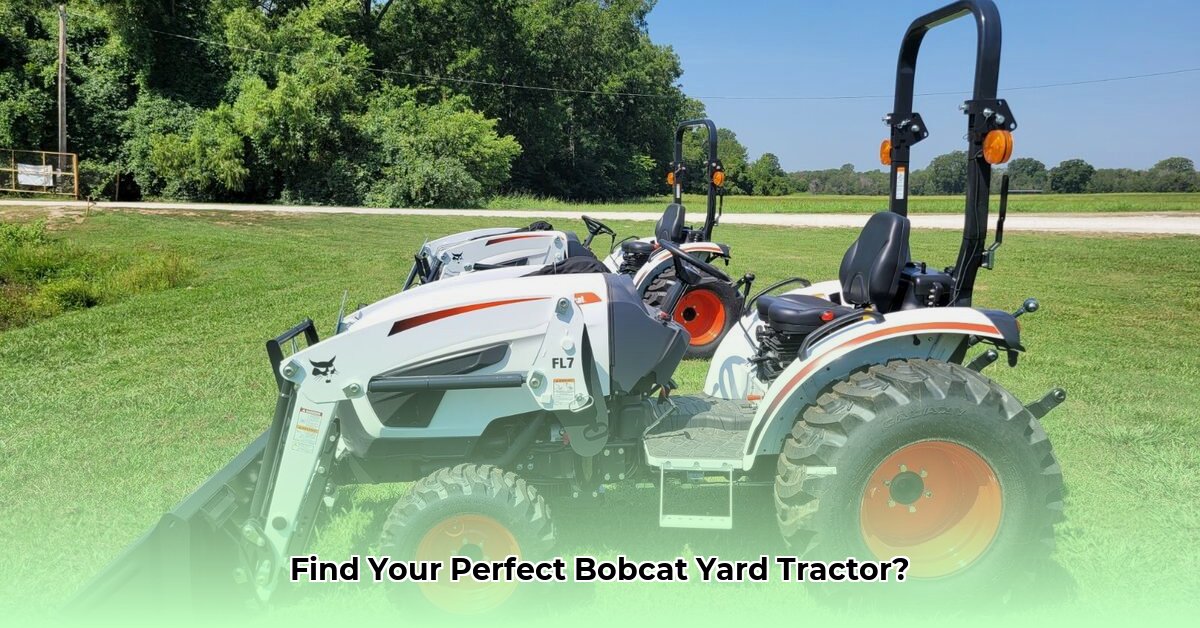
Choosing the right Bobcat yard tractor can be overwhelming. This comprehensive guide compares the 1000, 2000, 4000, and 5000 series, helping you select the perfect model for your needs and budget, whether you're a landscaper, farmer, or homeowner. For more details on the 1000 series, check out this helpful resource.
Bobcat Tractor Series Comparison: Power, Features, and Applications
Bobcat offers several tractor series, each designed for different tasks and property sizes. Understanding their key differences is crucial for making an informed decision. This comparison focuses on horsepower, lift capacity, transmission type, and ideal applications. Do you need a compact machine for intricate landscaping, or a powerful workhorse for extensive farming? The answer will guide your choice.
Bobcat 1000 Series: Compact Power for Smaller Properties
The 1000 series tractors are ideal for smaller yards and detailed landscaping work. Their compact size and maneuverability allow for precise operations in tight spaces.
- Key Specifications: Lower horsepower (typically 20-26 HP), relatively low lift capacity, and usually a hydrostatic transmission for easy control.
- Ideal Applications: Residential landscaping, small gardens, mowing smaller lawns, and moving lighter materials.
- Pros: Easy to operate, affordable, and perfect for smaller properties.
- Cons: Lower horsepower limits heavier tasks; lift capacity is restricted for larger loads.
- Illustrative Example: Ideal for a homeowner meticulously maintaining a small, landscaped yard.
Bobcat 2000 Series: Versatile Performance for Medium-Sized Properties
The 2000 series steps up in power and versatility, handling a broader range of jobs on larger properties. This series provides a balance between power and maneuverability.
- Key Specifications: Increased horsepower (typically 25-32 HP) and lift capacity compared to the 1000 series; hydrostatic or manual transmission options.
- Ideal Applications: Larger residential properties, small farms, light-to-medium agricultural tasks, and moving heavier materials.
- Pros: More powerful than the 1000 series, offers a good balance of power and maneuverability.
- Cons: Might be oversized for very small properties; may lack the power of the larger 4000 and 5000 series.
- Illustrative Example: Suitable for a small farmer managing a few acres of land and performing routine tasks like tilling and mowing.
Bobcat 4000 and 5000 Series: Heavy-Duty Power for Large-Scale Operations
The 4000 and 5000 series are built for demanding tasks on large properties. These are the heavy-duty workhorses of the Bobcat lineup.
- Key Specifications: High horsepower (4000 series: 34-47 HP, 5000 series: 46-58 HP), significant lift capacity, robust build, and often include features like enclosed cabs and Category II three-point hitches for larger implements.
- Ideal Applications: Large-scale agricultural operations, extensive landscaping projects, heavy material handling, and tasks requiring significant power.
- Pros: Immense power and lifting capacity, cab options offer operator comfort and protection.
- Cons: High price point, their size might be excessive for smaller projects.
- Illustrative Example: Perfect for a large-scale farm needing a tractor for heavy-duty plowing, hauling, and using multiple implements.
Choosing Your Bobcat Tractor: A Decision-Making Guide
Selecting the right Bobcat tractor hinges on your specific needs and budget. Consider these factors:
| Feature | 1000 Series | 2000 Series | 4000/5000 Series |
|---|---|---|---|
| Horsepower | Low | Medium | High |
| Lift Capacity | Low | Medium | High |
| Property Size | Small | Medium to Large | Large |
| Typical Tasks | Landscaping, small lawn care | Small farms, larger property maintenance | Extensive farming, heavy landscaping |
| Price Range | Lower | Medium | Higher |
This table provides a quick comparison. Think about the size of your property, the types of tasks you will perform, and your budget when making your decision. Consider testing different models if possible, to find the tractor that best suits your working style. Remember that the right tractor ensures efficiency and ease of use.
Fuel Efficiency and Long-Term Costs: Beyond the Initial Price Tag
While the initial purchase price is a factor, long-term operational costs significantly impact overall value. Fuel efficiency and maintenance are key considerations.
- Fuel Efficiency: Smaller models generally consume less fuel. However, a more powerful tractor completing a job faster can offset higher fuel consumption if labor costs are a major factor.
- Maintenance: Regular maintenance is vital for longevity and minimizing expensive repairs.
- Repair Costs: Access to parts and service is crucial for minimizing downtime.
- Depreciation: Factor in depreciation when assessing your total cost of ownership.
Remember to balance initial cost with long-term expenses for a truly cost-effective choice. Consider the frequency and intensity of your tractor use. These details will refine your decision. A larger, more powerful tractor might be more efficient in the long run for extensive tasks.